- Home > Health> Back & Spine Health
Top Spine Specialist: "This Is the Fastest Way to Relieve Spinal
Stenosis Pain for Good — Without Drugs, Injections, or Surgery"
Written by Dr. James Barkley, MD | Orthopedic Surgeon
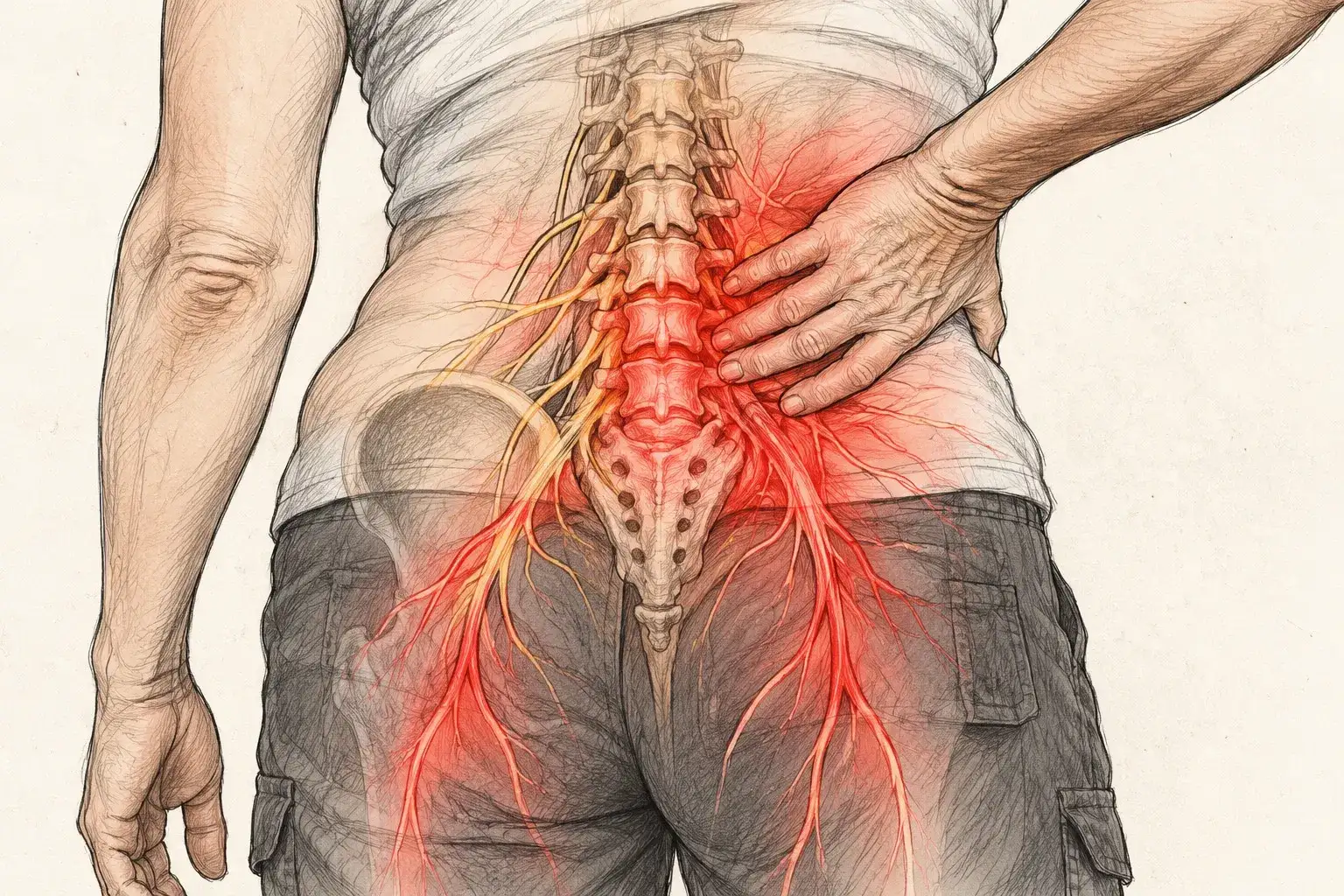
Dear Husband or Wife Who's Quietly Watching Your Partner's
World Get Smaller,
Maybe it started so gradually you almost didn't notice.
The Saturday walk got a little shorter.
At the grocery store, they started leaning harder on the cart.
In parking lots, you found yourself walking ten feet ahead… then
stopping and waiting for them to catch up.
A simple visit to see your grandkids suddenly became about
stairs, benches, and whether your partner would be able to keep
up with the little ones.
And lately, you've probably heard some version of:
"You go ahead. I'll wait here."
Your partner may still tell you they're fine.
They may insist they just need to sit down for a minute.
But you can see what's happening.
Little by little, spinal stenosis is deciding what the two of
you can do together.
And if you're the one reading this because they stopped
looking for answers a long time ago…
I want you to know about a question I wish I had asked much
sooner:
Why can someone with spinal stenosis sometimes push a shopping
cart through an entire store… yet struggle to walk from the
parking lot to the front door without stopping?
That question sounds simple.
But when I finally asked it about my own wife, it led me to
something that completely changed what I believed about spinal
stenosis. And why so many people spend years rotating through
medications, injections, physical therapy, and eventually
surgery without understanding what their own body has been
trying to tell them.
Because what comes next explains what may actually be happening
inside their back every time they stand and walk, and why
leaning forward on that grocery cart can make such a dramatic
difference.
My name is Dr. James Barkley.
I'm an orthopedic surgeon with 22 years of experience.
I've treated over 4,000 patients with spinal stenosis, nerve
compression, and chronic lower back pain.
I've lectured on pain management protocols at Vanderbilt
University Medical Center.
I've published research on non-surgical spinal decompression in
peer-reviewed journals.
And until 16 months ago, I believed everything my training
taught me about spinal stenosis.
THE SUNDAY EVERYTHING CHANGED...

It was an ordinary Sunday afternoon.
My wife, Carol
— 64 years old, retired school principal who'd run a building of
800 students for 28 years — was doing her grocery
shopping.
She'd been managing what her doctor called "a little narrowing"
for three years. Some days she could get through the whole
store. Some days she couldn't.
That Sunday, she made it to the middle of the cereal aisle.
That was as far as she got.
Both legs went from heavy to numb to gone. Not painful exactly.
Worse than painful. Absent. Like the wiring had been cut
somewhere above her hips.
She sat down on the bottom shelf of a display freezer, in front
of a store full of strangers, and waited for her legs to come
back.
A woman she had never met asked if she should call an ambulance.
She looked at me later that evening —
my wife, the woman I'd built my life beside — and said something I will never forget:
"I ran a school of 800 children for 28 years. I handled
everything. And now I can't make it to the dairy aisle."
But Here's What Destroyed Me:
This was a woman who had managed school crises for nearly three
decades. Who had calmed down panicking parents and navigated
budget cuts and stayed composed when everything around her was
chaos.
Now she was measuring her life in feet.
Two hundred feet to the mailbox.
Ninety feet to her seat at church.
Forty feet from the car to the front door of our house.
And she'd been counting it for two years without telling
me.
And here's the part I still can't forgive myself for.
I'd watched my wife lean on that shopping cart for two
years.
I'd slowed down beside her.
I'd waited when she needed to sit.
I'd quietly adjusted our plans around how far she could walk.
And I told myself we were managing.

I was the pain specialist in our family. I had personally
coordinated her care.
And I never once asked the obvious question: why does leaning
forward on a cart give her back her legs?
Her physiatrist:$200-a-session aquatic therapy, three times a week. She could
walk forever in the pool. The relief lasted exactly as long as
it took to stand up in the parking lot.
The pain management doctor: Three epidural steroid injections. The first bought her five
weeks. The second bought her three. The third bought her nothing
but a swollen face and a week without sleep.
Her neurologist:
Gabapentin and a low-dose muscle relaxer, which turned a sharp,
brilliant woman into someone who couldn't finish a sentence. She
gained 21 pounds and slept twelve hours a day. Her legs still
gave out. She just cared about it less.
The spine surgeon:
Wanted to do a two-level laminectomy. "Routine." $61,000. He
mentioned the 14% reoperation rate so casually I almost missed
it.
That night, something inside me snapped.
I wasn't going to watch the woman I'd built my life with
measure the rest of hers in feet.
I went to war with everything I thought I knew about spinal
stenosis.
THE MIND-BLOWING DISCOVERY
For the next four months, I lived like a man with a mission.
I devoured every study I could find. Called researchers in Japan
who'd spent thirty years imaging spines under load instead of
lying down. Flew to a conference in Copenhagen on non-surgical
spinal decompression. Spent over $31,000 of our family savings
on medical journals and private research access.
And what
I found made me want to put my fist through my office wall.
The entire spinal stenosis treatment industry is built on a
picture that doesn't show the problem.
Here's what they don't want you to know:
Roughly 80% of the people walking around with spinal stenosis
on their MRI have no symptoms at all.
None. No leg pain. No numbness. No stopping halfway to the
mailbox.
Same narrowing on the film. Completely different life.
So the narrowing on your scan is not the thing that's hurting
you.
And once you understand why, everything about how this condition
is treated stops making sense.
Your MRI was taken lying down.
Your pain happens standing up.
Think about that for a second. You lie flat on your back, knees
propped on a foam wedge, spine completely unloaded. That is the
exact position your body uses to make stenosis pain stop. It's
the same relief you get from sitting down. Same relief you get
from leaning on the cart.
We take the picture in the one posture where the problem
disappears.
Then we schedule surgery based on it.
When researchers image the same patients with the spine actually
loaded, the way it is every second you're upright, roughly two
out of three lose measurable space inside the canal. Some cross
the line from "moderate" to "severe" the instant weight goes
through the spine.
That space is where your leg nerves live.
Let me explain what's actually taking it.
THE REAL ROOT CAUSE OF SPINAL STENOSIS
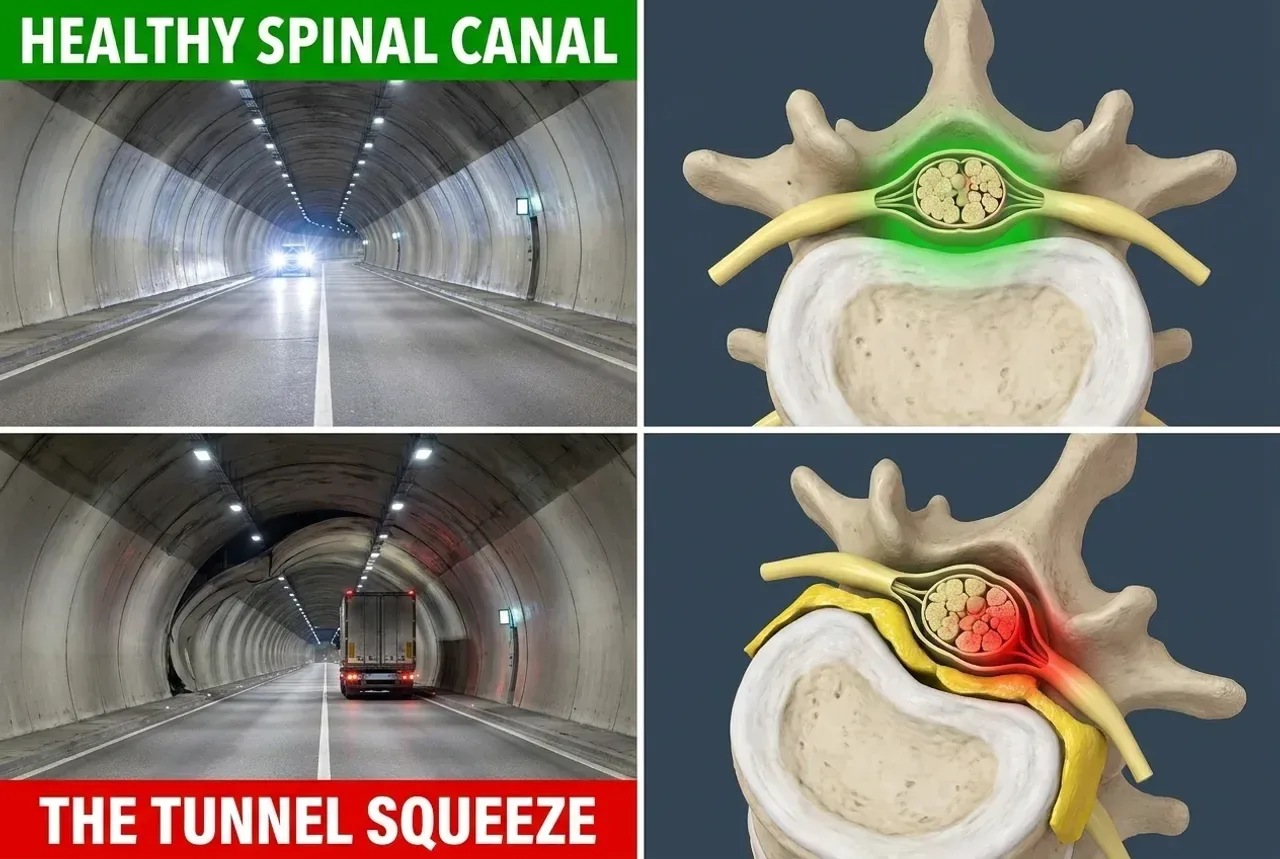
Think of your spinal canal like a tunnel.
Not a pipe. A tunnel, with a lining. And running through it, the
thickest bundle of nerve cable in your body. Every signal to
both legs travels through there.
The roof
and side walls of that tunnel are lined with a ligament called
the ligamentum flavum. In a healthy spine it's roughly 80%
elastin. Stretchy. Springy. It stays pulled tight and flat
against the wall no matter what you do, the way a well-fitted
lining should.
Here's what nobody explained to my wife.
That lining only stays tight as long as the tunnel stays
tall.
Your discs are the spacers that hold the height of every
level of that tunnel. As they lose water and flatten with age,
the tunnel gets shorter.
And when the tunnel gets shorter, the lining goes slack.
Slack lining doesn't disappear. It buckles.
Inward. Into the tunnel. Into the space your nerves are supposed
to occupy.
And it doesn't stay soft while it does it. Under years of that
mechanical stress, the elastin gets replaced by scar-like
collagen. The lining thickens. It stiffens. It stops being a
lining and starts being a wall.
In people with spinal stenosis, that thickened yellow
ligament alone can account for
50 to 85% of the total narrowing inside the canal.
I call this The Tunnel Squeeze.
And it's the single structural failure that spinal stenosis
treatment has spent thirty years working around instead of
addressing.
Now stand up.
Standing loads your spine and closes the curve. Every hour you
spend upright, the tunnel narrows further. Whatever space was
left gets taken.
That's why your legs are fine in the chair and finished at the
end of the driveway.
But here's the part almost nobody explains, and it's the
part that changes everything.
It isn't the pinching that makes your legs burn.
It's the starving.
The nerves inside that tunnel need blood, same as any other
tissue. When the tunnel narrows, the veins around those nerves
can't drain properly. They engorge. Pressure builds inside the
canal. And once that pressure climbs high enough, fresh blood
can't get in.
Your leg nerves are suffocating.
That's why it comes on after 200 feet instead of immediately.
That's why it's heaviness and burning and dead-weight legs
instead of one clean, sharp pain. And it is exactly why
sitting down fixes it in under a minute.
Sitting opens the tunnel. Blood floods back in. The nerves
breathe.
And that is the shopping cart.
When my wife leaned forward on that cart, she wasn't giving
up. She was opening the tunnel.
It has a name in the medical literature. We call it the
shopping cart sign. It's in every textbook.
Every doctor she saw knew it.
Not one of them treated it as what it actually is: her own
body demonstrating, in public, in front of strangers, exactly
what her spine needed.
More room. And less load.
As The Tunnel Squeeze progresses, three things happen at
once:
- The lining thickens and buckles inward. The yellow ligament that should sit flat against the canal wall turns fibrous and folds into the space your nerves occupy. This does not reverse on its own. Every year it takes a little more.
- Every hour upright closes what's left. Standing and walking load the spine and narrow the canal further. Your worst symptoms happen in the exact position no scan ever measures you in.
- The nerves lose their blood supply. Congestion inside the canal chokes off circulation to the nerve roots. Your legs aren't weak. They're being starved, and they shut down to protect themselves.
THE 15-MINUTE MIRACLE HIDING IN PLAIN SIGHT
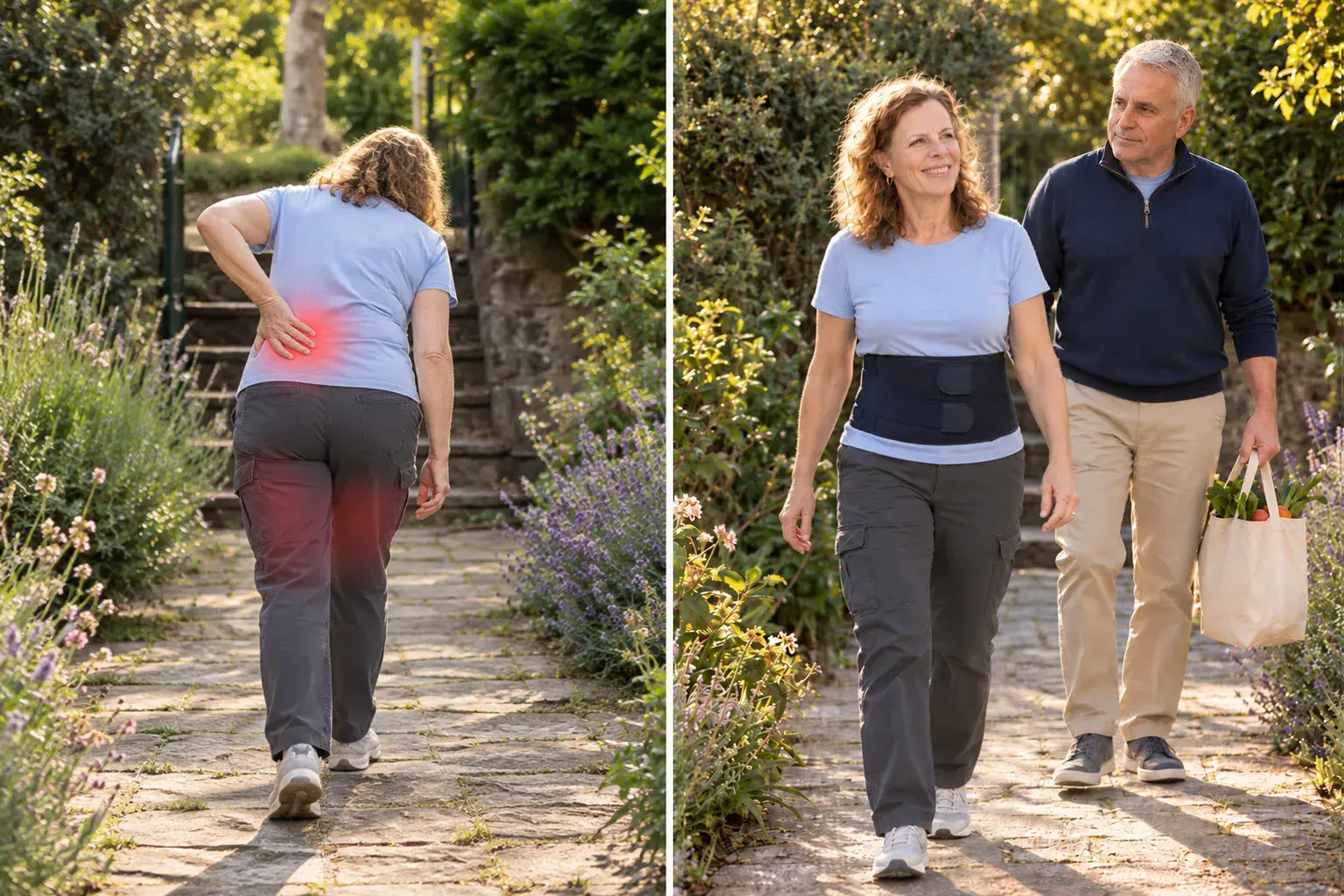
Remember my wife in that cereal aisle?
Six weeks after my discovery, she walked the entire farmers
market with my daughter. Both loops. Stopped once, to buy
peaches.
Not
"managing" her spinal stenosis. Not "learning to live with it."
Actually better. Walking further, sleeping through the night,
driving herself to see her grandchildren on weekends.
Just 15 minutes a day of something so mechanically simple
that I was embarrassed it took me 22 years of medical training
to figure out.
To actually address spinal stenosis pain, you need to do
THREE things simultaneously:
TAKE THE LOAD OFF THE TUNNEL —
Physically brace and support the trunk so the compressive load
that closes your canal every hour you're upright gets carried
by the device instead of by your spine.
RESTORE THE BLOOD FLOW — Use deep infrared heat that penetrates 3-5mm past the skin to
bring circulation back into the tissue surrounding nerve roots
that have been starved of it for years.
RELEASE THE MUSCLE CLAMP
— Use targeted vibration at the exact right frequency to
unlock the deep spinal muscles that have been in spasm for
years, clamping the segment down and adding compression on top
of the narrowing you already have.
Miss even
ONE of
these steps, and you're wasting your time.
That's why heat pads alone don't work. (They warm the skin, and
they never take a single pound of load off the segment.)
That's why stretching alone doesn't work. (You cannot stretch a
ligament that has already turned to scar tissue.)
That's why injections don't work. In the largest randomized
trial ever run on this, 400 stenosis patients across 16
hospitals, adding a steroid to the injection produced minimal
or no benefit over the numbing agent alone at six weeks. (They
quiet the nerve's alarm for a few weeks. They don't give it
back one millimeter of room or one drop of blood flow.)
You need all three. At the same time. In the right sequence.
A Triple Method Spinal Decompression.
That's exactly what I figured out how to deliver.
THIS BREAKTHROUGH IS QUIETLY INFURIATING AN ENTIRE INDUSTRY
After my wife's recovery, word spread faster than I
expected.
My colleague
Dr. Patricia Harlow
— rheumatologist, 54, diagnosed with two-level stenosis and
already scheduled for decompression — heard about it through a
mutual friend at the hospital.
She
called me on a Wednesday night.
"James. Whatever you did for Carol. I need it. Yesterday."
Three weeks after she started, she canceled the surgery.
Then
it was my neighbor Ted — a retired contractor, 61, who'd spent
more money on pain management in three years than his
daughter's college tuition. He hadn't walked his own dog in
two years. Couldn't get from the truck to the lumber yard
entrance without stopping twice.
15
minutes with my prototype device.
He sat
quietly for a moment. Then he looked at me and said:
"It's like somebody opened the door back up. I can feel my legs
at the end of the block."
That was on a Thursday. By Saturday, he'd sent three texts to
people in his construction network. Within three weeks, I had
strangers calling me from area codes I didn't recognize.
Retired teachers who couldn't stand through a church service.
Long-haul truck drivers who were about to lose their CDL.
Grandmothers who'd stopped going to the zoo because they knew
they'd never make it past the first exhibit. Men who'd spent
$50,000 on physical therapy in a decade and still couldn't walk
to the end of their own street.
Every. Single. One. Got. Better.
Not "better managed." Not "learning coping strategies."
Actually, measurably, demonstrably better.
That's when the phone calls from lawyers started.
WHEN YOU MESS WITH $134 BILLION, THEY COME FOR YOU

First it was the "collegial" warnings.
A department chair I'd worked with for a decade pulled me aside
at a conference: "James, what you're doing makes the rest of us
look bad. You should consider your position carefully."
Then came
the cease-and-desist letters. Two law firms, both representing
vague coalitions of "concerned medical professionals" who
claimed my device was "undermining established treatment
protocols."
Then my primary equipment supplier — a company I'd been
sourcing from for eleven years — suddenly "couldn't fulfill"
my orders. "Supply chain issues." A call to my contact there
confirmed what I suspected: corporate pressure from above.
They wanted me gone because I'd created something that could
make their entire business model obsolete.
A device that:
- Addresses the mechanical and circulatory cause of spinal stenosis pain, not just the nerve's alarm signal
- Works in 15 minutes a day, not weeks of $200 appointments
- Lets people manage it themselves at home, not in a $3,500-a-visit pain clinic
But here's what those suits didn't count on...
I'd
already partnered with a team of biomedical engineers who
understood exactly what was at stake. We'd already turned my
initial prototype into something reproducible, clinically
validated, and manufacturable at scale.
And we'd already helped over 21,500 people.
Not "better managed." Not "learning coping strategies."
Actually, measurably, demonstrably better.
That's when the phone calls from lawyers started.
INTRODUCING THE DEVICE THAT ACTUALLY ENDS SPINAL STENOSIS
PAIN
It's called the RejuvaCare Triple-Method Back Massager.
And it's the only device designed to deliver all three requirements for lasting spinal stenosis relief simultaneously, automatically, in exactly the right sequence:
And it's the only device designed to deliver all three requirements for lasting spinal stenosis relief simultaneously, automatically, in exactly the right sequence:
✓ PRECISION DECOMPRESSION SUPPORT — Contoured to brace and support your lumbar spine so the
compressive load that closes your canal every hour you're
upright is carried by the device instead of by your vertebrae.
When researchers put a lumbar support on stenosis patients and
sent them walking, more than eight out of ten improved their
walking distance by at least 30%.
✓ DEEP INFRARED HEAT at the specific depth and temperature
that reaches the tissue around your nerve roots
— not just the skin surface — bringing blood flow back into
the exact area that has been starved of circulation for years,
which is what's actually producing the heaviness and burning
in your legs.
✓ TARGETED VIBRATION tuned to 30-50Hz
— the exact frequency proven to penetrate and release your
deep spinal muscles, not just the surface ones — unlocking the
muscle spasm that's been clamping your segments together and
adding compression on top of The Tunnel Squeeze.
All three. Synchronized. Automatic.
You strap it on, press one button, and let 16 months of
obsessive research — backed by 22 years of hands-on clinical
experience — do the work.
No appointments.
No copays.
No prescription side effects.
No waiting three weeks for an injection slot to open up.
Think of it as structural engineering for your spine. Taking
the load off the tunnel and getting blood back to the nerves
inside it, so your legs stop shutting down every time you
stand up.
HERE'S EXACTLY HOW IT GIVES YOU YOUR LEGS BACK IN 15 MINUTES
When you strap on the RejuvaCare Triple Method Back Massager,
here's what happens:
0-5 Minutes: The Load Comes Off
The contoured brace takes the compressive load your lower spine
has been carrying every waking hour and transfers it into the
device. Within 60 seconds, the pressure grinding your segments
together starts to ease. The tunnel stops being squeezed shut.
For the first time in years, your canal isn't being closed a
little further with every minute you spend upright.
Most people feel a spreading warmth in the first 30 seconds.
That's years of constriction finally releasing.
5-10 Minutes: The Blood Comes Back
With the load off, deep infrared heat reaches the tissue
surrounding your nerve roots. Blood flow increases. The nerves
that have been slowly starving inside that narrowed canal start
getting oxygen again.
This is the part nobody addresses. Injections quiet the
alarm. Surgery removes bone. Neither one restores
circulation to a nerve that's been suffocating for a decade.
10-15 Minutes: Your Muscles Finally Let Go
Targeted vibration hits your deep stabilizer muscles, the
ones that have been locked in spasm, clamping your segments
together and squeezing the tunnel tighter. They start to
release. Your nervous system gets the signal: "It's safe
now. You can relax." The muscles that were adding
compression on top of the narrowing finally stand down.
After 15 Minutes?
You stand up differently. Not "less painful for a few hours."
Differently. Like a tunnel that just got its clearance back.
The results compound. Daily use means daily decompression. Week
by week, the distance gets longer. The legs stay under you
further from the car. The heaviness takes longer to arrive.
Then it stops arriving at all.
THE RESULTS THAT HAVE SPINE SURGEONS SCRAMBLING
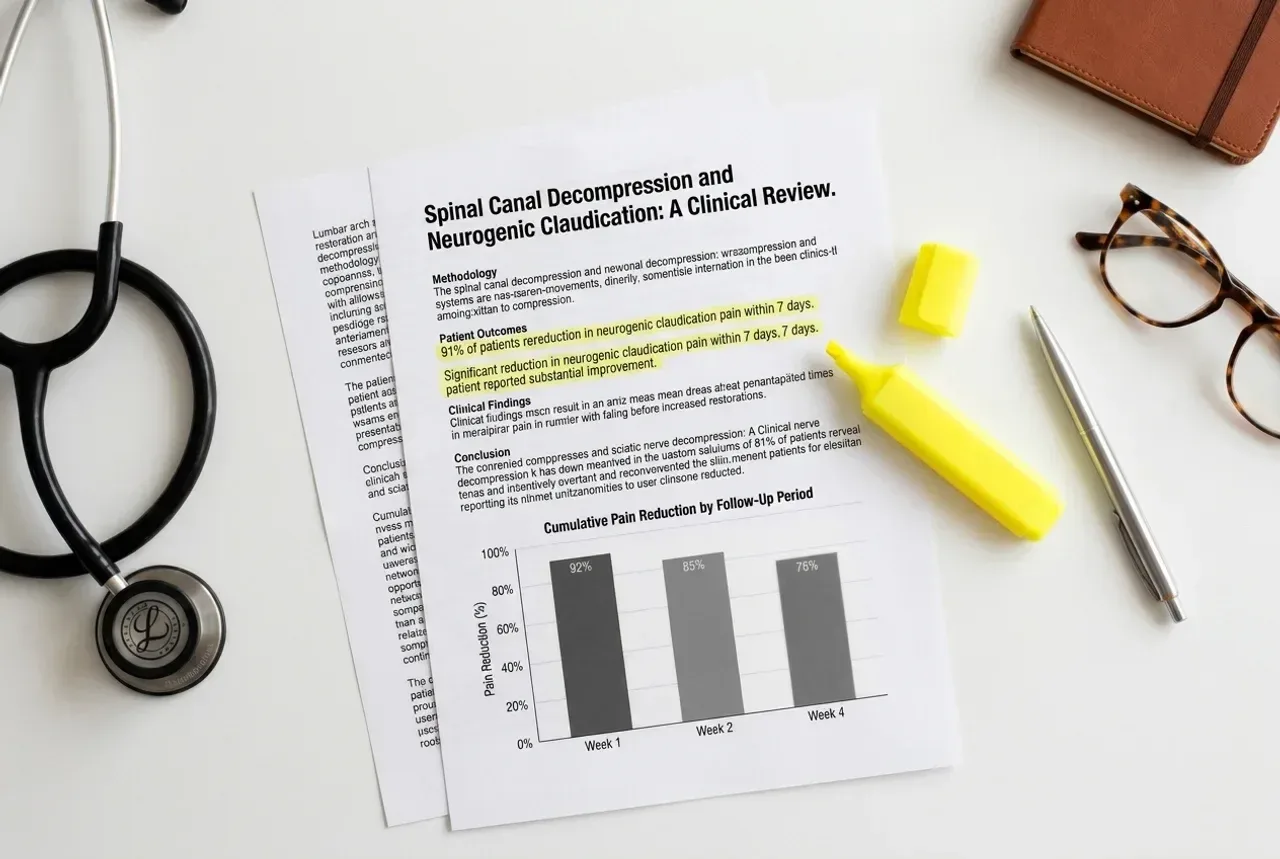
In the
last 16 months, over 21,500 people have used the RejuvaCare
Triple Method Back Massager.
The results?
- 87% reported walking further without stopping within 14 days
- 81% said they no longer needed their primary pain medication within 6 weeks
- 74% reported being able to cancel scheduled injections or surgery
But my favorite statistic?
Our refund rate is 0.03%. Three people per ten thousand asked
for their money back.
Check out what real users are saying:
Patricia M. - Cleveland, OH -
★★★★★
"I was scheduled for a second round of injections and my
neurologist was already talking about surgery. I'd been on
gabapentin for two years. I hated who it made me. Four weeks
with the RejuvaCare Back Massager and I've cut my gabapentin
dose in half, with my doctor's supervision. The heaviness in
my legs is not just reduced. It's gone. I told my surgeon I
was canceling the consultation. He was not pleased."
David K. - Greenville, SC -
★★★★★
"I'm 58, retired contractor, two laminectomies already
discussed and $52,000 quoted, and they still wanted me to
sign. I walked into his office three weeks ago to tell him I
was canceling. He asked what I was doing instead. I told him
about this device and he literally laughed at me. I walked
out of his office, drove home, and walked my dog two miles
for the first time in four years. He can keep laughing. I'll
keep walking."
Carol M. - St. Louis, MO-
★★★★★
"I'm 63, retired teacher. Spinal stenosis for five years. I
stopped taking my grandkids anywhere because I knew I'd have
to sit down within ten minutes and ruin it for everyone.
Last weekend I walked the whole zoo with them. The whole
zoo. When my grandson asked to go again next month I said
yes without even thinking about it. I had to go inside so he
didn't see me cry."
Dr. Margaret Chen - Physical Medicine & Rehabilitation
Physician -
★★★★★
"I've been a PM&R specialist for 17 years. I know
the literature on spinal canal narrowing and neurogenic
claudication cold. I tried the RejuvaCare Back Massager
on my own stenosis out of professional curiosity and
frankly, skepticism. The results were enough that I now
quietly recommend it to patients who want an
evidence-consistent alternative to the standard
injection-and-surgery treadmill. The triple-method
approach is the first thing I've seen that addresses the
load and the circulation together instead of chasing the
symptom."
THE PRICE THAT HAS THE PAIN INDUSTRY IN A PANIC
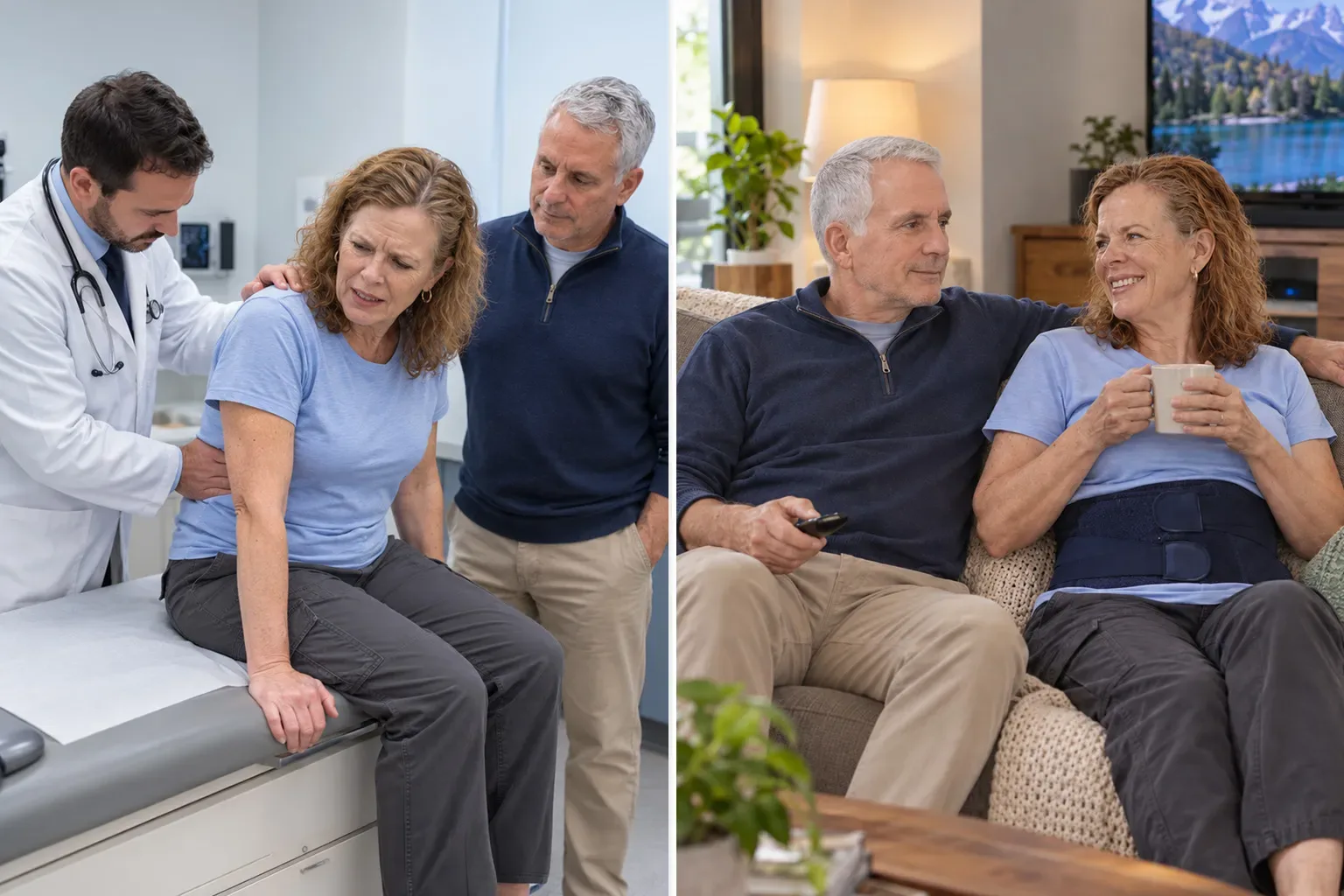
Let me show
you what managing spinal stenosis REALLY costs in America:
Ongoing Clinical Care Route:
- 2-3x per week for 6 months = 60+ visits
- $150-$200 per visit average (with insurance copay)
- Total: $9,000-$12,000 (plus the 3 hours a week you don't have)
The Pain Management Route:
- Epidural steroid injection: $1,500-$3,000 each
- Need 3-4 per year to maintain partial relief
- The largest trial ever run found the steroid added minimal or no benefit over the numbing agent alone
- Gabapentin/Lyrica: $200-$400/month, cognitive fog, weight gain, dependencyTotal: $6,000-$15,000/year, with cognitive fog as a bonus
The Surgical Route:
- Lumbar decompression: $50,000-$90,000 without insurance
- 6-12 weeks recovery (unpaid if self-employed)
- Roughly 1 in 7 patients need a second operation within five years
- In one four-year study, one in three patients did not meet the criteria for lasting success
- Total: Your retirement and a coin flip on permanent disability.
The medical industry loves these options.
Know why?
Because they keep you coming back.
Temporary relief equals lifetime customer. It's a goldmine built
on your suffering.
But here's what really infuriates them...
The RejuvaCare Triple-Method Back Massager should cost $3,000.
That's what similar medical-grade thermal compression devices
sell for in clinical settings. That's what my prototype cost me
to build.
But I didn't create this to get rich.
I created this because I watched my wife — the woman I'd
built my life beside — sit down on the floor of a grocery
store and wait for her own legs to come back.
Because there are millions of people exactly like her who
deserve better than what the current system has decided to offer
them.
The regular price is $249.99.
Already 90% less than one month of typical pain management
treatment.
But that's not what you'll pay today.
THE 60% OFF 'MIDDLE FINGER' TO THE PAIN INDUSTRY
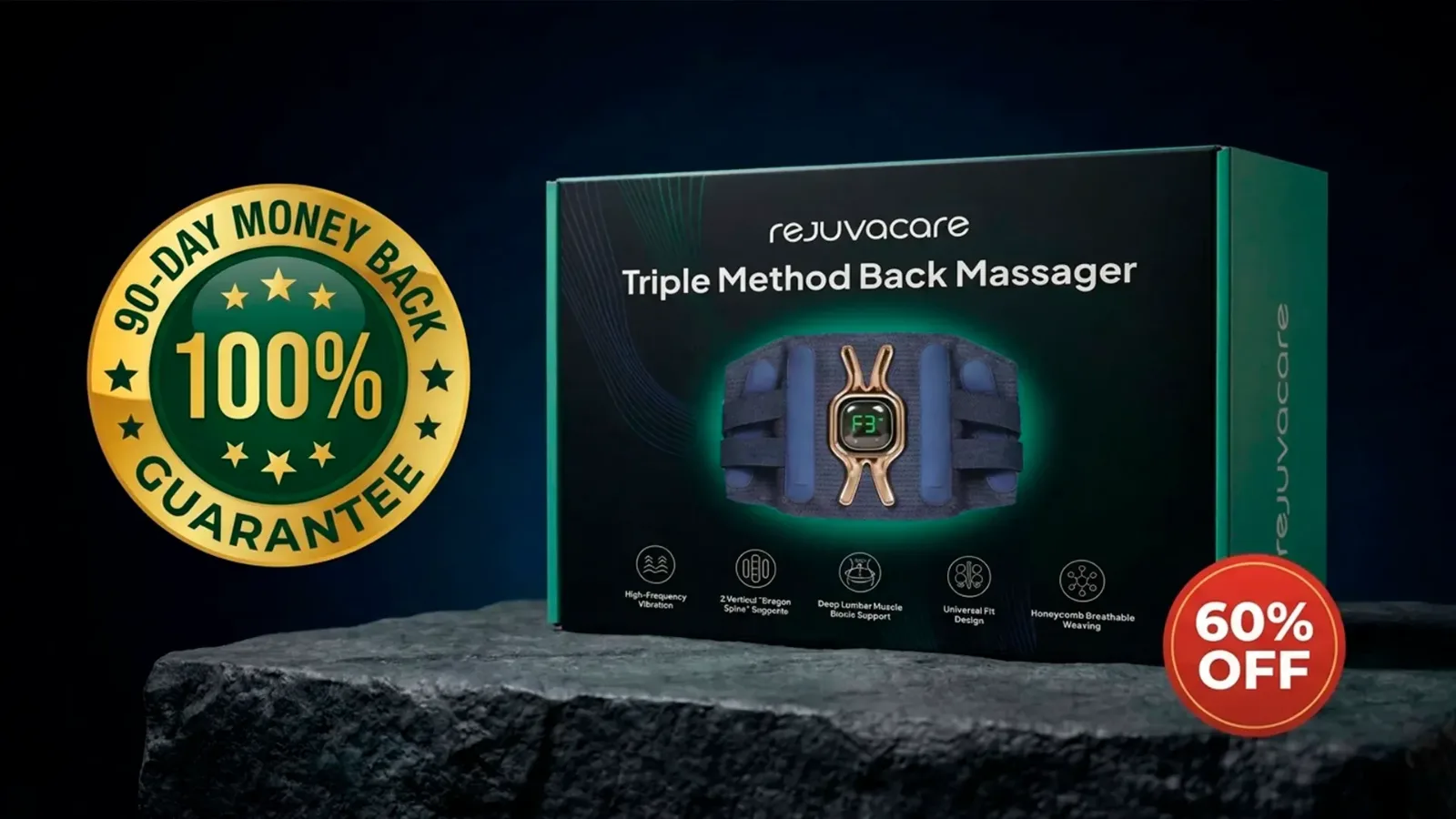
You want to know why we're doing this?
Remember those cease-and-desist letters I mentioned?
We just
got word that a major pain management conglomerate is attempting
to block our device's distribution through regulatory pressure.
They can't copy the technology, we have ironclad patents. They
can't buy us out, I told them exactly where to go.
So they're
trying to bury us in legal fees and bureaucratic delays.
My response?
I'm putting 5,000 units on sale at 60% off this Summer Sale.
Because
every person who gets better is living proof of what they're
trying to suppress.
And 5,000
success stories are harder to bury than a single doctor's
research.
Just
$99.95.
- Less than ONE epidural steroid injection.
- Less than three weeks of prescription medication.
- Less than a fraction of what you'd spend in four physical therapy sessions.
For the
only device that addresses both the mechanical load and the
circulation loss behind your spinal stenosis pain.
LOOK, I UNDERSTAND THE SKEPTICISM
You've been down this road before. You've spent money on things
that turned out to be expensive dust collectors. You've felt the
hope and then the crash when something didn't deliver.
So here's my promise:
So here's my promise:
Use the RejuvaCare Triple Method Back Massager every single
day for 90 days.
Feel the load come off. Feel the heat reach the nerves that
have been starving. Feel the vibration release what's been
locked for years.
And if you don't wake up one morning and walk further than
you have in years without even thinking about it...
I'll refund every single penny.
- No forms.
- No "store credit."
- No questions asked.
Just email us, say it didn't work, and your refund hits
within 48 hours.
Why am I so confident?
Because in 16 months and over 21,500 devices, our refund
rate is 0.03%.
That's three people per ten thousand.
And two of those were because their dog destroyed the
device.
MY PERSONAL 90-DAY "WALK-FURTHER" GUARANTEE
Try it for 90 days. Use it twice a day if you want.
If your legs aren't carrying you further than they are right now,
email support@rejuvacare.com and say "It didn't work."
We'll send a prepaid label and your refund hits within 48 hours.
No forms. No store credit. No questions.
That's 90 days to find out whether the thing that's been stealing
your distance is fixable.
Three people per ten thousand have taken us up on it.
Support: support@rejuvacare.com | 302-261-9613
BUT HERE'S THE CATCH (AND IT'S A BIG ONE)
This 60%
discount disappears in 72 hours.
Not because
I'm creating artificial urgency. But because my legal team bills
at $450 an hour and I need this sale to generate the capital to
fight these patent trolls.
After 72
hours, we go back to $249.99.
Still a
steal compared to the alternative. But not $99.
Also, and
this matters, we only have 3,847 units left at this price.
Our
manufacturer produces 500 units per week. When we were featured on
a major health podcast last month, we sold 2,100 units in 28
hours.
We no
longer sell on Amazon, only cheap counterfeits that don't use the
proper heat calibration or vibration frequency. The only place to
get the original RejuvaCare is through our official website.
If you're reading this, units are still available.
I cannot promise they'll be available tomorrow.
And here's
the thing...
Every minute you wait is another minute you're:
- Funding the pharmaceutical companies that profit from your pain
- Enriching the clinics that have a financial interest in keeping you dependent
- Measuring your life in feet while the actual solution sits right here
While the actual method is sitting right here for less than a
night out to dinner.
THE CHOICE THAT WILL DEFINE YOUR NEXT DECADE

Right now, you're at a crossroads.
Path #1: Keep Doing What You're Doing
Keep
rotating through injections that work for a few weeks. Keep taking
medications that dull your nerve pain and your personality.
Keep planning your lives around benches and parking spaces.
Keep saying no to the zoo, the market, the walk after dinner, the
second loop around the block.
Keep being
a recurring revenue stream for an industry that has no financial
incentive for you to actually get better.
Path #2: Try Something That Actually Fixes It
Spend less
than you'd spend on one injection. Get a device that's helped over
21,500 people address the mechanical and circulatory cause of
their spinal stenosis pain. Wake up in a few weeks and walk past
the bench you've been aiming for without noticing it's there.
Join the
quiet revolution against a system that has been profiting from
your pain.
The choice seems pretty obvious to me.
HERE'S EXACTLY WHAT TO DO NEXT
1. Click the button below that says "Check Availability Now →"
(Pro tip: Get two. One for each of you. Or gift one to someone you love who's suffering. You'll save more)
(Pro tip: Get two. One for each of you. Or gift one to someone you love who's suffering. You'll save more)
2. Fill out your shipping info
(We ship same day if you order before 3 PM EST)
3. Wait 3-5 days for your back's salvation to arrive
4. Use it for 15 minutes
the moment it arrives
5. Email us your success story (Seriously, you can email us at support@rejuvacare.com)
But
whatever you do,
don't close this page thinking "I'll order later."
Later doesn't exist when you're in pain.
Later is another sleepless night.
Later is another sleepless night.
Later is another walk you turn down.
Later is the discount expiring and units selling out.
Your legs have been telling you something for long enough.
Click below and let's open the tunnel back up.
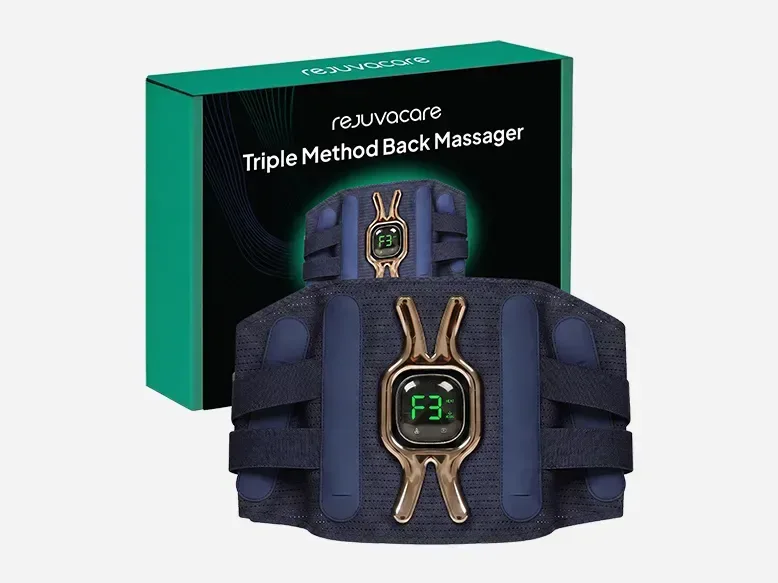
You can take advantage of this unique offer for 3 days only!
INTERNET ONLY OFFER!
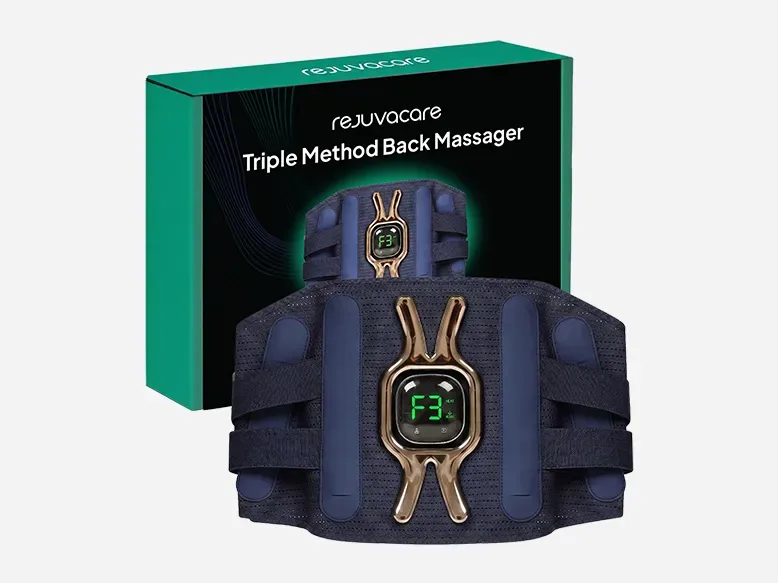
FOR A LIMITED TIME:
60% OFF + THEY PAY FOR SHIPPING
LIMITED TIME READER-ONLY SPECIAL:
Ordering now makes you eligible for 60% OFF Triple Method
Massager. Only available here. Limited to first 500
customers only.
With respect and urgency,
Dr. James Barkley, MD
Creator, RejuvaCare Triple-Method Back Massager
Champion of At-Home Spinal Methods
P.S. — Carol spent the weekend planting tomatoes in our garden,
on her hands and knees for three hours, and then walked to
the corner and back just because she could. The woman who
sat down on a grocery store floor nine months ago. That
could be your partner in a few weeks. But only if you act
now.
P.P.S.
— The RejuvaCare Triple Method Back Massager is
FDA-registered, clinically tested, and recommended by
physicians who aren't afraid to challenge the system. We
built it the right way. For the right reasons.
P.P.P.S.
— Seriously. We're down to 3,847 units. When I check
inventory and see it below 1,000, this page comes down.
Don't say I didn't warn you.